
Benefits of Compression Boots for Leg Recovery: What the Evidence Says
Compression boots create rhythmic pressure around the legs while you rest. They have become popular with runners, cyclists, strength athletes, travelers, and people who simply spend long days on their feet. But what do leg compression boots actually do—and which benefits are supported by research?
- 30 minutes Current session length
- Oakland Near Lake Merritt
- Noninvasive Relax while the boots cycle
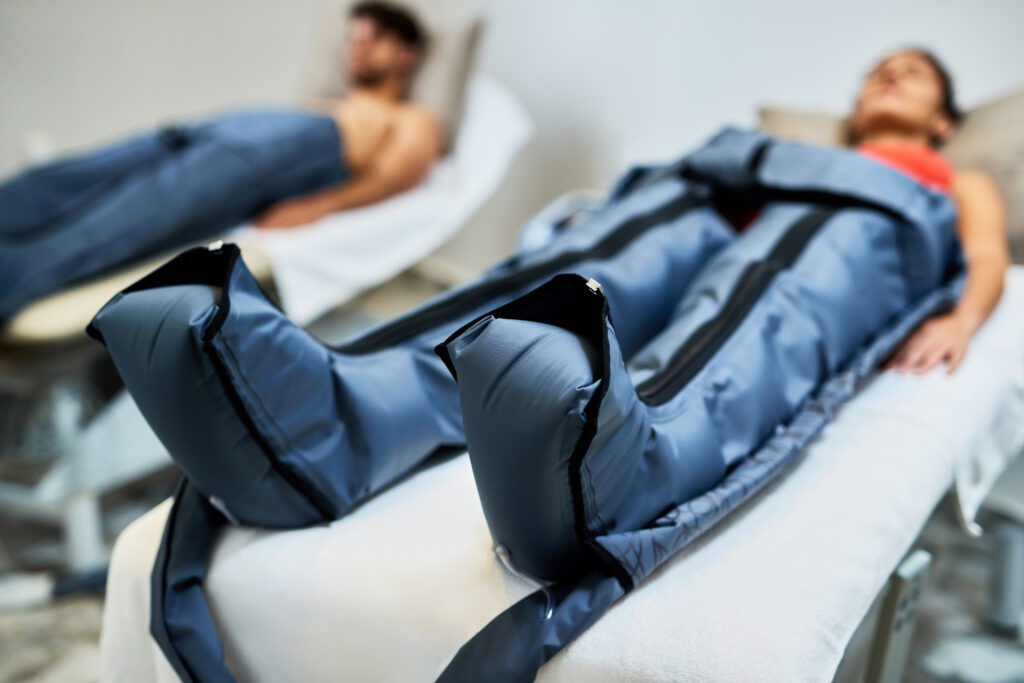
Compression boots use inflatable chambers to apply and release pressure around the legs. Research suggests they may provide a small benefit for perceived post-exercise soreness, but results are mixed and they have not been shown to guarantee faster healing, better performance, or injury prevention. Many people value them as a comfortable, low-effort addition to a broader recovery routine.
What are compression boots?
Compression boots are wearable sleeves connected to an air pump. The sleeves contain overlapping chambers that inflate and deflate around the feet, calves, and sometimes the thighs. This process is commonly called intermittent pneumatic compression, or IPC.
Recovery boots used in fitness and wellness settings are inspired by pneumatic compression technology used in healthcare. However, a wellness session is not the same as hospital treatment for a diagnosed circulation problem, blood clot, or lymphedema. Those conditions require guidance from a qualified healthcare professional.
What do leg compression boots do?
During a session, the pump fills the boot’s chambers in a programmed sequence. Pressure commonly begins lower on the leg and moves upward before releasing and repeating. You may experience a firm squeezing sensation followed by a brief release.
The boots are fitted
The sleeves are secured around your legs over comfortable clothing.
The chambers inflate
Air pressure moves through the boot in a controlled sequence.
The pressure releases
The cycle relaxes before beginning again for the rest of the session.
The session should feel snug and noticeable, not painful. More pressure is not automatically better. Tell the staff immediately if you experience pain, numbness, tingling, burning, dizziness, or unusual discomfort.
Potential benefits of compression boots
Online descriptions often make broad promises about “detoxing,” instantly clearing lactic acid, preventing injuries, or dramatically accelerating recovery. The evidence does not support presenting those outcomes as guaranteed. A more useful way to evaluate compression boots is to focus on realistic, experience-based benefits.
They may reduce perceived soreness
A recent research review found the clearest potential benefit was a modest reduction in how sore participants felt after exercise. The size of the effect varied across studies and individuals.
They offer low-effort recovery time
Once the boots are fitted, you can sit back while the system cycles. This makes a session easy to pair with a rest day or the period after a demanding workout.
They create a rhythmic leg-massage sensation
Many clients enjoy the repeated pressure and release. Legs may feel lighter or more relaxed afterward, although that subjective experience is not the same as treating a medical condition.
They can complement—not replace—recovery basics
Compression boots can sit alongside sleep, appropriate training volume, nutrition, hydration, and active recovery. They are not a shortcut around those fundamentals.
Do compression boots really help recovery?
The honest answer is that they may help some aspects of recovery for some people, but the overall research remains mixed.
A 2024 systematic review and meta-analysis combined 17 studies involving 319 participants. It found trivial-to-small effects on muscular function, trivial-to-moderate effects on pain and soreness, and highly variable results for markers of muscle damage. The authors concluded that the main potential benefit was reduced perceived soreness.
A small 2020 study of ten distance runners found no significant improvement in pain ratings or C-reactive protein after pneumatic compression compared with no treatment. Different devices, pressures, session lengths, workouts, and participant groups can all affect study results.
This evidence supports a balanced conclusion: compression boots may be worth trying when your goal is relaxation or possible relief from perceived soreness, but they should not be marketed as a guaranteed way to heal an injury, eliminate inflammation, improve circulation permanently, or boost athletic performance.
Who may enjoy a compression boot session?
A wellness-focused compression session may appeal to healthy adults who want a passive recovery experience, including:
- Runners, cyclists, and recreational athletes after demanding training
- Strength-training clients dealing with normal post-workout leg soreness
- People who spend much of the workday standing
- Travelers who want a relaxing leg-focused wellness session after a trip
- Anyone curious about adding a noninvasive recovery tool to a balanced routine
New or unexplained leg pain, one-sided swelling, redness, warmth, shortness of breath, or chest pain should not be treated as ordinary workout soreness. Seek medical care instead of booking a wellness session.
What to expect from compression therapy at Kume Float in Oakland
Kume Float currently lists a 30-minute compression boots service at its Oakland wellness studio, located at 584 Grand Ave near Lake Merritt. Confirm the latest service details and pricing before your appointment because offerings can change.
Wear comfortable clothing
Athletic pants or leggings generally work well beneath the boots. Tell the team about recent injuries, surgery, unexplained swelling, medical conditions, or unusual leg symptoms before starting.
Relax and communicate
The boots should create firm, rhythmic pressure without pain. Ask for help or stop the session if the sensation becomes uncomfortable.
Notice how your legs feel
Some people report a relaxed or lighter feeling, while others notice little difference. Individual responses vary, and one session cannot predict a long-term outcome.
Review Kume’s current compression therapy information and current pricing before booking.
How often should you use compression boots?
There is no universal schedule that works for everyone. Research protocols vary, and a wellness routine should be based on your goals, comfort, training load, and medical history. Starting with one professionally guided session allows you to evaluate the experience before deciding whether occasional or recurring visits make sense for you.
If you are recovering from an injury, managing chronic swelling, or using compression for a diagnosed medical condition, ask your healthcare professional for an individualized plan rather than following a general fitness schedule.
Are compression boots safe?
Healthy adults may find a properly fitted, supervised recovery session comfortable, but pneumatic compression is not appropriate for everyone. Medical guidance lists important contraindications and cautions.
Get medical clearance before using compression boots if you have—or may have:
- An untreated or recently treated deep vein thrombosis, pulmonary embolism, or thrombophlebitis
- Severe or uncontrolled heart, kidney, or liver failure
- Ischemic vascular disease or another serious arterial circulation problem
- Severe peripheral neuropathy, significant numbness, or reduced sensation
- Active cellulitis, inflamed skin, open wounds, or a significant skin condition on the legs
- New, unexplained, or one-sided swelling or pain
Stop immediately and seek appropriate help if a session causes sudden pain, numbness, dizziness, breathing difficulty, or chest discomfort. This article is educational and is not medical advice.
Compression boots FAQs
What do leg compression boots do?
They use air-filled chambers to apply and release pressure around the legs in programmed cycles. The sensation is often described as a rhythmic squeeze that moves upward before releasing.
What are the main benefits of compression boots?
The most defensible potential benefit is a modest reduction in perceived post-exercise soreness for some people. They also provide a convenient, low-effort recovery and relaxation experience. Results are not guaranteed.
Do compression boots remove lactic acid?
It is more accurate to say the boots apply intermittent pressure and may influence short-term fluid and blood movement. Claims that they “flush lactic acid” or detox the body oversimplify exercise physiology and should not be treated as a guaranteed benefit.
Are compression boots the same as compression socks?
No. Compression socks provide steady pressure while worn. Pneumatic recovery boots repeatedly inflate and release using an electric air pump.
How long is compression therapy at Kume Float?
Kume currently lists a 30-minute compression boots service. Check the service and pricing pages before booking because appointment details can change.
Can I use compression boots if I have poor circulation or a history of blood clots?
Do not self-treat a diagnosed circulation problem or clotting history with recovery boots. Ask a qualified healthcare professional who knows your medical history whether pneumatic compression is appropriate for you.
Research and safety sources
- Maia F. et al. Effects of lower-limb intermittent pneumatic compression on sports recovery: a systematic review and meta-analysis.
- Draper S.N. et al. Effects of intermittent pneumatic compression on delayed onset muscle soreness in long-distance runners.
- Artés A. et al. Effects of intermittent pneumatic compression on cardiovascular recovery after repeated sprint exercise.
- West Suffolk NHS Foundation Trust: intermittent pneumatic compression patient guidance and contraindications.
Try Compression Therapy in Oakland
Visit Kume Float & Cryo Spa near Lake Merritt for a guided compression boots session. Ask questions before your appointment so the team can help you understand what to expect.
Informational notice: This article discusses a wellness service and does not provide medical advice, diagnosis, treatment, or guaranteed results. Consult a qualified healthcare professional about symptoms, injuries, circulation concerns, or whether pneumatic compression is appropriate for you.