
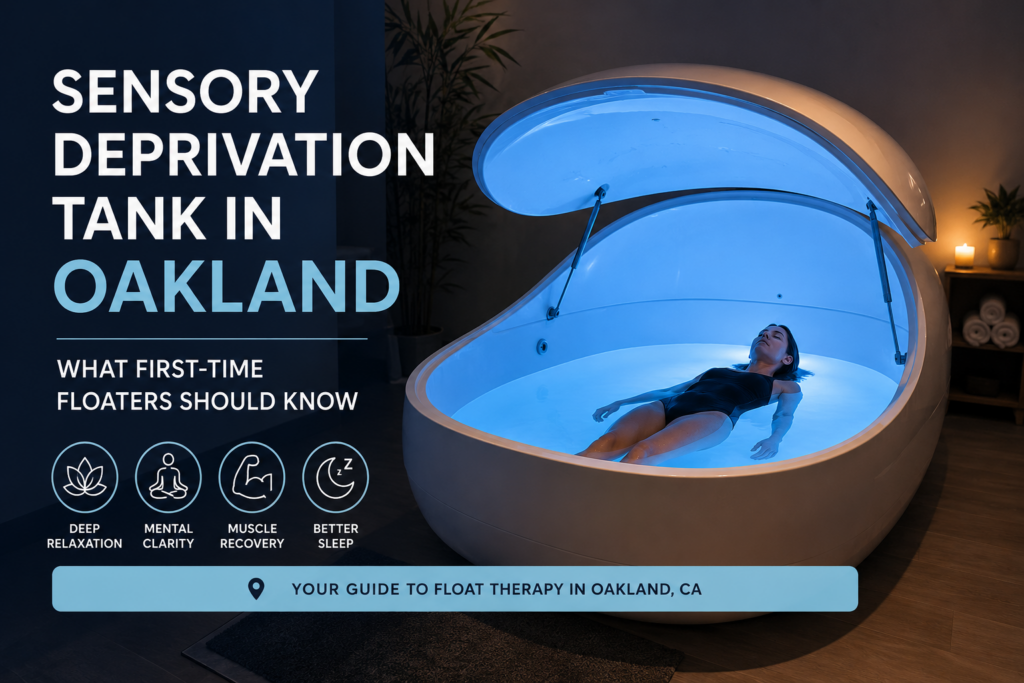
If you’ve searched for a sensory deprivation tank in Oakland, an isolation tank, or a float tank near you, you may be wondering what actually happens once you step inside.
At KumeFloat in Oakland, float therapy is designed to give your body and mind something that can be difficult to find in everyday life: a quiet environment with fewer distractions, less physical pressure, and time dedicated entirely to rest.
Whether you are looking for relaxation, a mental reset, post-workout recovery, or simply want to try something different, here is what you should know before your first float.
What Is a Sensory Deprivation Tank?
A sensory deprivation tank is a private float tank containing warm water with a high concentration of Epsom salt.
The salt creates enough buoyancy for your body to float with very little effort. The environment is designed to reduce outside stimulation such as noise, light, and physical pressure.
You may also hear the same experience described as:
Although the names vary, they generally describe the same basic wellness experience: floating effortlessly in a quiet, low-stimulation environment.
At KumeFloat, the goal is simple: give yourself an opportunity to disconnect from the constant stimulation of everyday life and settle into a deeper state of relaxation.
What Does an Isolation Tank Feel Like?
The first few minutes are usually about getting comfortable.
Once you lie back, the saltwater supports your body. Instead of actively trying to stay afloat, you can allow your arms, legs, neck, and back to relax.
For people accustomed to being constantly connected to phones, computers, conversations, traffic, music, and notifications, the quiet can feel unusual at first.
Then something interesting happens.
You stop having to respond to everything around you.
There is nowhere you need to go.
There is nothing you need to hold.
There is no screen demanding your attention.
You simply have time to be still.
Many floaters describe the experience as a combination of meditation, deep relaxation, and weightlessness.
Your first session does not need to feel profound to be worthwhile, either. Sometimes the biggest benefit is simply having uninterrupted time to rest.
Why Are People Searching for Sensory Deprivation Tanks?
Interest in sensory deprivation tanks and float therapy has expanded as more people look for ways to manage the demands of busy lifestyles.
Research into Floatation-REST is still developing, but studies have explored its potential relationship with relaxation, anxiety, discomfort, and sleep. Results vary by study and more high-quality research is still needed, so floating should be viewed as a wellness practice rather than a medical treatment.
For many KumeFloat guests, the attraction is much simpler: they want an hour without distractions.
Stress Relief
A float session creates an environment intentionally separated from many of the sounds, screens, conversations, and responsibilities that fill the average day.
Muscle Relaxation
Floating removes much of the pressure normally placed on the body while sitting, standing, walking, or exercising.
Meditation & Mental Clarity
With much less competing for your attention, some people use their float to meditate while others simply allow their thoughts to slow naturally.
Better Rest
Some floaters report feeling deeply relaxed after a session. Creating intentional time for relaxation can be a valuable part of a healthy wellness routine.
Float therapy should be considered a wellness and relaxation experience and is not a substitute for professional medical treatment.
What Happens During Your First Float at KumeFloat?
Trying an isolation tank for the first time is much easier than many people imagine.
Arrive and Get Comfortable
Before your session, you will have time to prepare and become familiar with the float environment.
Using the restroom beforehand is a good idea so you can enjoy your session without interruption.
Shower Before Entering
Guests shower before entering the float tank.
This helps maintain the cleanliness of the float environment while also preparing you to relax.
Enter the Float Tank
Once you enter the tank, simply lie back. The saltwater does the work.
You do not need to know how to meditate, swim, or float. Allow yourself a few minutes to experiment with different arm positions until you find one that feels natural.
Let Yourself Adjust
First-time floaters sometimes spend the beginning of the session thinking: “Am I doing this correctly?”
You are. There is no required way to experience a float.
You might meditate. You might think. You might lose track of time. You might simply enjoy being somewhere quiet.
Shower After Your Session
When your float is finished, shower again to rinse the salt from your skin and hair.
Then give yourself a little time before jumping immediately back into a packed schedule.
What Should You Avoid Before Float Therapy?
A little preparation can make your first float much more comfortable.
Avoid Shaving Immediately Before
Saltwater and freshly shaved skin are not always a comfortable combination. Consider shaving or waxing well before your appointment.
Wait for Tattoos to Heal
Wait until a new tattoo has properly healed before entering a float tank.
Remove Contact Lenses
Contact lenses and saltwater do not mix well. Remove them before your session.
Give Yourself Enough Time
Avoid scheduling your float between stressful appointments if possible. Give yourself permission to slow down.
Will I Feel Claustrophobic?
This is one of the most common questions first-time floaters have.
Not everyone enjoys enclosed environments, and your comfort should always come first.
Modern float experiences are designed around relaxation rather than endurance. Ask the KumeFloat team any questions you have about the equipment and environment before your session.
You do not receive extra credit for making yourself uncomfortable.
Do I Need to Be Good at Meditation?
Not at all.
One reason people enjoy float therapy is that the environment removes many of the distractions that can make traditional meditation challenging.
There is no requirement to completely clear your mind. Thoughts will come and go.
Instead of trying to achieve a particular mental state, allow the experience to unfold naturally.
How Long Is a Float Therapy Session?
KumeFloat offers both 60-minute and 90-minute float experiences.
A comfortable introduction for many first-time floaters.
Additional time for guests looking for a longer relaxation experience.
Some people relax almost immediately. Others need 15 or 20 minutes before they fully settle in.
There is no correct timeline.
Float Therapy for Oakland's Busy Lifestyle
Oakland and the greater East Bay rarely slow down.
Between commuting, work, exercise, family responsibilities, phones, and constant digital stimulation, your brain can spend nearly every waking hour processing information.
That is part of what makes float therapy so different from many other wellness experiences.
Instead of introducing another stimulus, floating removes them.
For residents throughout Oakland and surrounding East Bay communities, an hour in a sensory deprivation tank can offer something increasingly rare: uninterrupted quiet.
Float Therapy vs. Other Wellness Experiences
KumeFloat offers several wellness experiences, but each creates a very different type of session.
Float Therapy vs. Cryotherapy
Float therapy focuses on reducing stimulation and creating a quiet, weightless environment.
Cryotherapy uses a brief exposure to extremely cold temperatures as a wellness and recovery experience.
If your goal is primarily relaxation, meditation, or quiet time, you may prefer starting with a float.
Float Therapy vs. Sauna
A sauna creates a warm environment intended to encourage sweating and relaxation.
A float tank creates a warm, buoyant environment designed to minimize stimulation and physical pressure.
The experiences are completely different, which is why some wellness routines include both.
How Often Should You Use a Sensory Deprivation Tank?
There is no universal schedule.
Some people float occasionally when they need a reset. Others make float therapy a regular part of their wellness routine.
Your ideal schedule depends on your goals, preferences, budget, and how you personally respond to floating.
Rather than worrying about the perfect frequency before your first appointment, start with one session and see how the experience feels.
Frequently Asked Questions About Sensory Deprivation Tanks
Is an isolation tank the same as a sensory deprivation tank?
Generally, yes. “Isolation tank,” “sensory deprivation tank,” “float tank,” and “flotation tank” are commonly used to describe the same type of low-stimulation floating experience.
Do I need to know how to swim?
No. The high concentration of salt makes the water extremely buoyant, allowing you to float without swimming.
What should I wear in a float tank?
Float rooms are private. Ask the KumeFloat team about current session procedures when booking your appointment.
Can I fall asleep while floating?
Some people become extremely relaxed during float therapy. Follow the instructions provided by the KumeFloat team for a safe and comfortable session.
Is float therapy a medical treatment?
No. Float therapy should be considered a wellness and relaxation experience, not a substitute for medical treatment. If you have a health condition or concerns about whether floating is appropriate for you, speak with a qualified healthcare professional.
What if saltwater gets in my eyes?
Avoid touching your eyes during the float. If you need assistance or have questions about preparing for your session, the KumeFloat team can explain the process before you begin.
Where can I try a sensory deprivation tank in Oakland?
KumeFloat offers private float therapy experiences in Oakland along with cryotherapy, Sauna Cocoon, compression therapy, Botanical Head Spa services, and other wellness experiences.
Experience Float Therapy at KumeFloat in Oakland
You do not need previous meditation experience. You do not need to be an athlete. And you do not need to know exactly what you want to get out of your first float.
You just need to give yourself permission to stop for a little while.
Let the water support you.
Experience the quiet.
If you have been searching for an isolation tank in Oakland, sensory deprivation tank near you, or a peaceful float therapy experience in the East Bay, KumeFloat offers an environment designed for rest, relaxation, and recovery.